



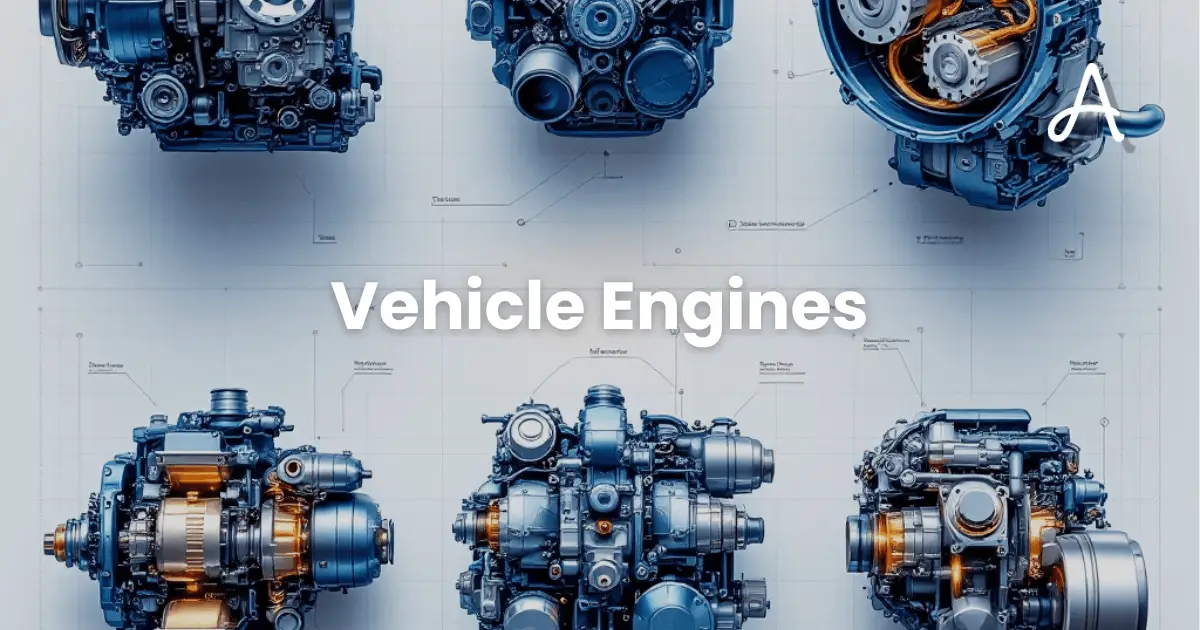
Understanding the heart of your vehicle – its engine – is crucial whether you’re buying a new car, maintaining your current one, or simply curious about automotive technology. The type of engine significantly impacts performance, fuel efficiency, emissions, and the overall driving experience With various technologies available, from traditional combustion engines to advanced electric motors, navigating the options can seem complex.
This guide breaks down the main vehicle engines to help you understand how each engine type works and what it offers.
The Core Categories of Vehicle Engines
Generally, vehicle engines fall into three primary groups: Internal Combustion Engines (ICE), Electric Motors (found in EVs), and Hybrid Powertrains Let’s explore each.
Internal Combustion Engines (ICE)
The most familiar engine type, ICEs generate power by burning fuel internally. Petrol and diesel engines are the most common ICE variants in modern cars.
ICE by Fuel Type
- Petrol/Gasoline Engines: These are the most prevalent vehicle engines globally. They work by igniting a mixture of petrol and air with a spark plug.
- Pros: Generally offer good performance, smoother operation, and are widely available. Often less expensive upfront than diesel or hybrid counterparts.
- Cons: Typically less fuel-efficient than diesel engines, especially on highways. Produce CO2 emissions.
- Diesel Engines: Diesel engines compress air until it’s hot enough to ignite diesel fuel injected into the cylinder, eliminating the need for spark plugs.
-
- Pros: Excellent fuel efficiency (especially for long distances), high torque (good for towing/heavy loads).
- Cons: Can be noisier and produce more particulate emissions than petrol engines (though modern diesels are much cleaner), often have a higher purchase price.
- Other ICE Variants (CNG/LPG): Some vehicles are designed or adapted to run on Compressed Natural Gas (CNG) or Liquefied Petroleum Gas (LPG). These are often chosen for lower running costs and potentially lower emissions in specific categories but have limitations in availability and performance.
ICE by Cylinder Configuration/Layout
The arrangement and number of cylinders also define an ICE’s characteristics:
- Inline Engines (e.g., I3, I4, I6): Cylinders are arranged in a single straight line. This is the simplest and most common automobile engine design. I4 (four-cylinder) engines are very common due to their balance of efficiency and adequate power for most passenger cars. I3 engines are often found in smaller, fuel-efficient vehicles, while I6 engines are known for their smoothness.
- V-Type Engines (e.g., V6, V8, V10, V12): Cylinders are arranged in two banks, forming a ‘V’ shape. This layout is more compact than an inline configuration for the same number of cylinders, allowing larger engines to fit in more vehicles. V6 engines offer a good blend of power and refinement, while V8, V10, and V12 engines are typically reserved for high-performance cars, trucks, and luxury vehicles.
- Flat/Boxer Engines: Cylinders are arranged horizontally in two opposing banks (like boxers punching). This design allows for a lower centre of gravity, improving handling. Commonly used by Subaru and Porsche.
Electric Vehicle (EV) Motors
EVs ditch the combustion engine entirely, relying solely on electricity stored in a battery pack to power one or more electric motors.
- How they work: The battery supplies electrical energy to the motor(s), which generate rotational force to turn the wheels.
- Pros: Zero tailpipe emissions instant torque for quick acceleration, quiet operation, potentially lower running costs (electricity vs. fuel, less maintenance).
- Cons: Limited range compared to ICE vehicles (though improving rapidly), longer refuelling time (charging), higher initial purchase price, reliance on charging infrastructure.
Read our EV buying guide.
Hybrid Engines
Hybrid vehicle engines combine an Internal Combustion Engine (usually petrol) with one or more electric motors and a small battery pack The goal is to improve fuel efficiency and reduce emissions compared to traditional ICE vehicles.
How they work: The system intelligently switches between petrol power, electric power, or a combination of both, depending on driving conditions. The battery is typically recharged through regenerative braking (capturing energy during deceleration) and by the ICE.
- Types of Hybrids:
- Mild Hybrid: The electric motor assists the engine but usually cannot power the car alone. Offers modest fuel economy gains.
- Full Hybrid: Can drive short distances on electric power only. Offers significant fuel savings, especially in city driving.
- Plug-in Hybrid (PHEV): Features a larger battery that can be charged externally (plugged in). Offers a longer electric-only range (e.g., 20-50 miles) before the ICE kicks in.
- Pros: Better fuel economy and lower emissions than comparable ICE cars no range anxiety like pure EVs (for standard and mild hybrids).
- Cons: Increased complexity, higher purchase price than conventional ICE cars, added weight from battery and motor.
Which Engine Type is Right for You?
Choosing the right engine type depends on your priorities
Budget: Petrol engines often have the lowest upfront cost. EVs and Hybrids typically cost more initially but may save money on fuel and maintenance over time.
- Driving Habits: Frequent city drivers might benefit most from a Hybrid or EV. Long-distance highway drivers might find Diesel or efficient Petrol engines more suitable.
- Performance Needs: V6/V8 engines or EVs offer strong acceleration. Smaller inline engines prioritize efficiency.
- Environmental Concerns: EVs produce zero tailpipe emissions, while Hybrids offer a significant reduction compared to traditional ICE vehicles.
While petrol and diesel engines remain common, the automotive landscape is shifting. Stricter emissions regulations and advancements in battery technology are driving the popularity of hybrid and fully electric vehicle engines. Understanding these different engine types empowers you to make informed decisions for your driving needs today and tomorrow,
