



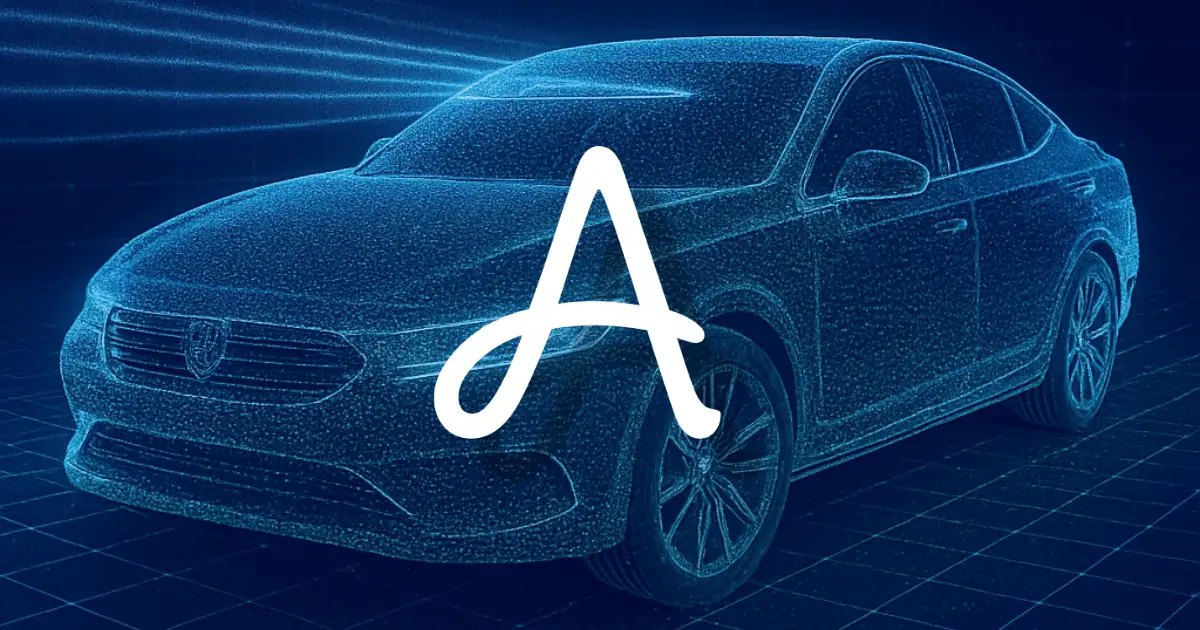
Vehicles that can sense and respond to their environment rely on more than just cameras and radar. One of the most important sensors used in modern driver assistance and autonomous systems is called LiDAR.
LiDAR stands for Light Detection and Ranging. It uses laser light to scan the surroundings and measure distances with high accuracy. This scanning process helps a vehicle build a detailed map of its environment, even in complex or low-visibility conditions.
LiDAR technology is used in many types of vehicles, especially those designed with advanced driver assistance systems (ADAS) or autonomous driving features. It plays a key role in how a vehicle perceives the world around it in real time.
What Is LiDAR Technology And Why It Matters
LiDAR (Light Detection and Ranging) is a remote sensing technology that measures distance by timing how long it takes for laser pulses to bounce off objects and return to the sensor. This creates a precise 3D map of the surroundings.
In vehicles, LiDAR helps create accurate spatial awareness by detecting objects like other cars, pedestrians, and road features. The system emits thousands of laser pulses per second, calculates distances based on return times, and builds a detailed point cloud map.
Unlike cameras that capture 2D images, LiDAR directly measures distances in three dimensions. This capability makes it valuable for autonomous vehicles and advanced driver assistance systems that need to understand the physical space around them.
- Historical context: LiDAR was first developed for aerospace and military applications in the 1960s but has evolved to become smaller and more affordable for automotive use.
- Core benefit: The technology provides precise depth perception that helps vehicles make safer navigation decisions.
- Basic function: By measuring the time-of-flight for laser pulses, LiDAR creates accurate distance measurements to all nearby objects.
How LiDAR Works In Cars
Car LiDAR systems work by sending out invisible laser pulses that bounce off surrounding objects and return to the sensor. The system measures how long each pulse takes to return, calculating the exact distance to each point.
The process creates what’s called a “point cloud” – a collection of millions of 3D data points that together form a detailed map of the vehicle’s surroundings. This happens continuously as the car moves, updating the map in real time.
Most automotive LiDAR systems use near-infrared light (typically 905nm or 1550nm wavelength) because it provides good range while remaining eye-safe. The laser pulses are invisible to humans but perfect for measuring distances accurately.
| LiDAR Process Step | What Happens | Why It Matters |
|---|---|---|
| Laser Emission | Thousands of laser pulses sent out in all directions | Begins the measurement process |
| Object Reflection | Pulses hit objects and bounce back to the sensor | Identifies what’s around the vehicle |
| Signal Reception | Sensor detects returning pulses and measures travel time | Determines exact distances |
| Data Processing | Computer converts time measurements into a 3D point cloud | Creates usable map for navigation |
The vehicle’s computer processes this point cloud data to identify objects, their size, position, and sometimes even predict their movement. This information helps the car make decisions about steering, braking, and acceleration.
Key Types Of LiDAR Sensors For Automotive
Vehicles use different types of LiDAR sensors depending on their needs, cost constraints, and design requirements. Each type has distinct advantages and limitations.
1. Mechanical LiDAR
Mechanical LiDAR uses physically rotating components to direct laser beams across the environment. These systems typically mount on the roof of test vehicles and spin to provide a 360-degree view.
- Advantages: Long detection range (up to 200+ meters) and high-resolution mapping
- Limitations: Larger size, moving parts that can wear out, and higher cost
- Examples: Early Waymo self-driving cars used large roof-mounted mechanical LiDAR
2. Solid-State LiDAR
Solid-state LiDAR contains no moving mechanical parts. Instead, it uses electronic components to steer the laser beams or flash the entire scene at once.
- Advantages: More durable, smaller size, easier to integrate into vehicle design
- Limitations: Often has a narrower field of view and shorter range
- Examples: Luminar and Innoviz provide solid-state LiDAR for production vehicles
3. FMCW LiDAR
FMCW (Frequency Modulated Continuous Wave) LiDAR measures both distance and velocity in a single measurement by analysing frequency shifts in the returning signal.
- Advantages: Can detect how fast objects are moving, works better in poor weather
- Limitations: More complex technology, currently more expensive
- Examples: Aurora and Aeva are developing FMCW LiDAR for next-generation vehicles
These different LiDAR types represent the evolution of the technology as it moves from expensive, bulky systems toward more practical automotive implementations that can be mass-produced.
Comparing LiDAR With Cameras And Radar
Modern vehicles often use multiple sensor types together to create a complete picture of their surroundings. Each sensor has different strengths and weaknesses.
| Feature | LiDAR | Camera | Radar |
|---|---|---|---|
| Range | 100-250 meters | 50-100 meters | 200-300+ meters |
| Resolution | High (3D points) | Very high (2D image) | Low to moderate |
| Weather Performance | Reduced in heavy rain/fog | Poor in low light/bad weather | Excellent in all conditions |
| Object Detection | Very good | Good (needs light) | Good (limited detail) |
| Color Recognition | No | Yes | No |
| Cost | Higher | Low | Moderate |
LiDAR excels at creating precise 3D maps of the environment and measuring exact distances to objects. However, it struggles in heavy precipitation when laser pulses scatter off raindrops or snowflakes.
Cameras provide rich visual information including colours, signs, and lane markings, but they depend on good lighting and visibility conditions. At night or in fog, camera performance drops significantly.
Radar uses radio waves instead of light, allowing it to “see” through bad weather and work in complete darkness. However, radar provides less detailed information about object shapes and sizes.
Most advanced driving systems use sensor fusion, combining data from all three sensor types to compensate for individual weaknesses. This approach provides redundancy and more reliable detection in all conditions.
LiDAR Challenges And Limitations
Despite its advantages, LiDAR technology faces several challenges that affect its widespread adoption in vehicles.
Weather conditions can significantly impact LiDAR performance. Rain, snow, and fog scatter laser pulses, reducing detection range and accuracy. Dense precipitation can create false readings or obscure important objects.
Cost remains a major hurdle for automotive LiDAR. While prices have decreased from the $75,000+ systems used in early research vehicles, even newer solid-state units often cost hundreds or thousands of dollars – too expensive for many consumer vehicles.
Processing LiDAR data requires substantial computing power. The millions of data points generated each second must be analysed in real-time, requiring specialized hardware and software that adds complexity and cost to vehicle systems.
Size and integration challenges exist as well. Early LiDAR systems were too bulky to integrate elegantly into vehicle designs. Newer systems are smaller but still require careful placement to maintain both functionality and aesthetics.
- Technical limitations: Current LiDAR systems have range limitations (typically 100-250 meters) that may be insufficient for high-speed driving scenarios.
- Interference concerns: As more vehicles adopt LiDAR, potential interference between systems could become an issue.
- Manufacturing complexity: Producing precise optical components at automotive scale and quality standards presents manufacturing challenges.
Engineers are working to address these limitations through miniaturization, new manufacturing techniques, and improved signal processing algorithms.
How LiDAR Enhances Vehicle Safety
LiDAR technology contributes to vehicle safety in several important ways by providing precise spatial awareness.
Pedestrian detection is significantly improved with LiDAR. The system can identify people crossing streets or walking alongside roads with high accuracy, even in low light conditions where cameras might struggle. This helps prevent accidents involving vulnerable road users.
LiDAR enables more reliable obstacle detection at various distances. The system can identify both stationary objects (like parked cars or road debris) and moving objects (like cyclists or animals) with precise distance measurements.
Lane keeping assistance benefits from LiDAR’s ability to detect road edges, barriers, and lane markings in 3D space. This helps vehicles maintain proper position even on roads with faded markings or in adverse weather.
- Emergency braking: LiDAR provides early detection of obstacles, giving the vehicle more time to calculate and execute emergency stops when needed.
- Adaptive cruise control: The precise distance measurements help maintain safe following distances in traffic.
- Navigation assistance: Detailed 3D mapping helps vehicles understand complex road layouts and intersections.
These safety features work together to reduce collision risks and improve overall driving safety, particularly in challenging conditions like night driving or bad weather.
Current And Future Adoption Of Self Driving LiDAR
LiDAR technology is increasingly appearing in production vehicles as the technology matures and costs decrease. Several automakers now offer LiDAR-equipped models.
Current vehicles using LiDAR include the Volvo EX90, which incorporates roof-mounted LiDAR for its driver assistance features. Mercedes-Benz S-Class and EQS models offer Drive Pilot systems with LiDAR in select markets. The Lucid Air uses LiDAR to support its DreamDrive Pro assistance package.
Automakers are taking different approaches to LiDAR adoption. Some, like Volvo and Mercedes, believe LiDAR is essential for advanced safety systems. Others, like Tesla, have avoided LiDAR in favour of camera-based systems, though many experts question whether cameras alone can provide sufficient safety.
The LiDAR market is growing rapidly. Companies like Luminar, Velodyne, and Innoviz are scaling up production while working to reduce costs. As manufacturing volumes increase, prices continue to drop, making the technology more accessible for mainstream vehicles.
- Adoption timeline: LiDAR is currently found mainly in luxury vehicles, with broader adoption expected as costs decrease over the next 3-5 years.
- Technology integration: Newer LiDAR units are being designed to blend seamlessly into vehicle grilles, headlights, or windshields.
- Regulatory influence: Emerging safety regulations and testing protocols may accelerate LiDAR adoption by requiring more advanced sensing capabilities.
Driving Forward With LiDAR
LiDAR technology represents a significant advance in how vehicles perceive and interact with their environment. By providing precise 3D mapping and distance measurements, LiDAR helps create safer, more capable vehicles.
As part of a comprehensive sensor suite that includes cameras and radar, LiDAR helps overcome the limitations of individual sensors. This combined approach, known as sensor fusion, provides redundancy and more reliable detection in all driving conditions.
LiDAR technology continues to evolve rapidly. Newer systems are becoming smaller, more affordable, and more capable, making them practical for integration into a wider range of vehicles beyond just luxury models.
For drivers and passengers, the benefits of LiDAR technology include enhanced safety features, more reliable driver assistance systems, and the foundation for future autonomous capabilities. As the technology matures, it will likely become as common in vehicles as cameras and radar are today.
Frequently Asked Questions About LiDAR In Vehicles
How does LiDAR detect objects in different weather conditions?
LiDAR performance decreases in heavy rain, fog, or snow because water droplets scatter the laser pulses. Modern systems use advanced signal processing and sensor fusion with radar and cameras to compensate for these limitations.
What is the typical range of automotive LiDAR sensors?
Most automotive LiDAR sensors can detect objects between 50 and 250 meters away, depending on the specific technology and design. Mechanical systems typically offer longer range, while solid-state systems may have shorter but more focused coverage.
Can LiDAR technology work effectively at night?
Yes, LiDAR works equally well day or night because it creates its own light source using laser pulses. Unlike cameras that depend on ambient light, LiDAR can operate in complete darkness with no performance reduction.
How do vehicles process the massive data generated by LiDAR?
Vehicles use specialized processors and AI algorithms to interpret LiDAR point cloud data in real-time. These systems identify objects, measure distances, and track movement using dedicated computing hardware designed for this specific purpose.
Why do some car manufacturers choose not to use LiDAR?
Some manufacturers avoid LiDAR due to its higher cost compared to cameras and radar. Others believe that advanced camera systems with AI can achieve similar results more economically, though this remains controversial among safety experts.
