



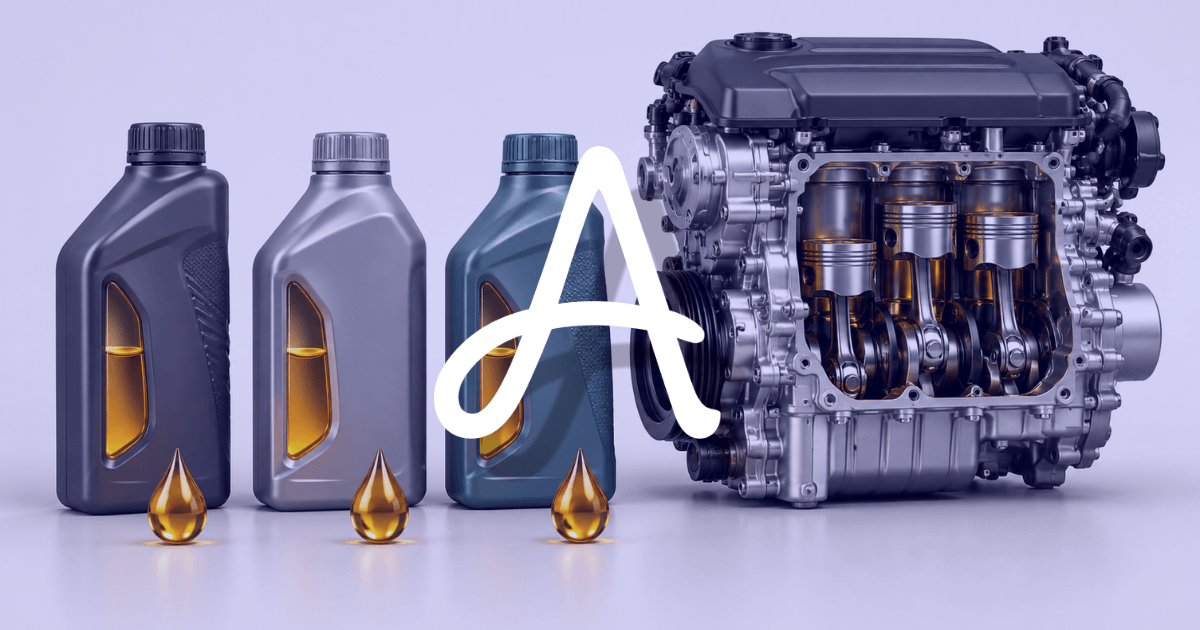
Different car engines need different types of engine oil because they are designed for different operating conditions, lubrication requirements and emissions systems. The right oil must flow when the engine starts, protect moving parts when hot and meet the performance specification set by the vehicle manufacturer.
That means choosing oil involves more than picking a familiar brand or the thickest grade. Two bottles labelled 5W-30 can have different formulations and approvals, so they are not automatically interchangeable.
What engine oil does inside a car engine
Oil forms a lubricating film between moving surfaces, helping limit friction and wear. It also carries heat away from components and helps manage deposits and corrosion through its additive package.
For example, the piston and its rings operate against the cylinder wall, where lubrication and oil control matter. Bearings and other moving components also depend on suitable oil. Protecting these parts requires the right balance of flow and film strength.
Three different meanings of “oil type”
Before comparing oils, separate these three details on the label:
| Label detail | What it tells you | What it cannot tell you alone |
|---|---|---|
| Viscosity grade, such as 5W-30 | How the oil meets flow requirements at low and high temperatures | Whether it meets your engine’s full performance requirements |
| Mineral, semi-synthetic or fully synthetic | The broad description of the base-oil formulation | Whether that product is suitable for your particular car |
| API, ILSAC, ACEA or manufacturer specification | The performance requirements or approvals claimed for the oil | Whether you have selected the correct viscosity and specification combination for your engine |
Use these details together. “Fully synthetic” is not a substitute for checking the specification.
Why engine oil requirements differ between cars
1. Engines are designed around a particular viscosity
Viscosity means resistance to flow. An oil that is too viscous for an application can make circulation and starting more difficult, while an unsuitable low-viscosity oil may not provide the required protection when hot.
Manufacturers balance lubrication with efficiency when specifying an oil. A lower-viscosity grade can suit an engine designed for it, but that does not make it a universal upgrade. Similarly, thicker oil is not automatically better protection.
2. Turbochargers and combustion systems create different demands
Oil must cope with the operating conditions of the engine it serves. Turbochargers add demanding lubrication conditions, while some turbocharged petrol engines with direct injection need protection against low-speed pre-ignition, or LSPI. This is an abnormal combustion event that can damage an engine.
Performance specifications address issues that viscosity numbers do not describe. For example, API SP includes requirements relating to LSPI, timing-chain wear and deposits. Treat this as an example of what a standard covers, not a recommendation for every car.
Our guide to different engine types explains the wider differences between common engine designs.
3. Exhaust filters and catalysts influence the formulation
Some engines require oils formulated for compatibility with diesel or petrol particulate filters and catalytic converters. These oils control SAPS, which stands for sulphated ash, phosphorus and sulphur.
ACEA’s C categories address this compatibility, but their requirements differ. A higher category number does not mean an oil is a universal replacement for a lower one. Use the exact category and any manufacturer approval specified for your engine.
This is one reason a diesel passenger car should not receive an oil simply because the bottle says “diesel”. Its emissions equipment and manufacturer requirements also matter.
4. Climate and driving conditions affect the job
Cold starts and sustained hot operation place different demands on oil. Where the handbook allows several viscosity grades, use its temperature guidance to choose between them. Hot weather alone does not justify switching to an unapproved thicker grade.
Driving patterns also affect servicing. Frequent short trips, prolonged idling and dusty conditions can fall under a manufacturer’s severe-use schedule. That may change the oil-change interval, rather than mean you need a different viscosity.
What do 0W-20 and 5W-30 mean?
These are multigrade viscosity ratings. In 5W-30, the 5W describes low-temperature performance, and W stands for winter. The 30 describes the high-temperature viscosity grade. The numbers are grades, not outside temperatures.
A 0W oil meets colder starting and pumping test requirements than a 5W oil. Meanwhile, a 30-grade oil has a higher hot-viscosity range than a 20-grade oil. Neither comparison tells you which bottle your car needs without its handbook.
For an illustrative comparison, suppose one car specifies 0W-20 and another specifies 5W-30. The second car’s oil is not “stronger” in a way that makes it better for the first. Each needs the grade and performance specification its manufacturer calls for.
Mineral, semi-synthetic and fully synthetic oil
- Mineral oil: Uses refined mineral base oil with additives. Suitability depends on the finished product meeting the engine’s requirements.
- Semi-synthetic oil: Commonly combines mineral and synthetic base oils. The label alone does not establish its performance or suitability.
- Fully synthetic oil: Uses synthetic base oils and an additive package. Such formulations can offer advantages in temperature performance and resistance to oil breakdown, but products still differ.
Do not choose by this label alone or assume that moving to synthetic oil automatically permits a longer service interval. Follow the vehicle’s maintenance requirements.
A practical engine oil checklist for vehicle maintenance
- Identify the exact engine. Check the model year, fuel type, engine variant and handbook for your market.
- Find the full oil requirement. Note the viscosity, required industry specification and any manufacturer approval.
- Compare the bottle and product data sheet. Check the complete requirement, not just the large viscosity number on the front.
- Follow the correct service schedule. Apply the handbook’s normal or severe-use guidance and any specified oil-life monitoring instructions.
- Check the oil level as directed. Use the handbook’s procedure and fill limits. Choosing the right oil does not replace regular level checks.
Frequently asked questions
Can two oils with the same viscosity be different?
Yes. Two 5W-30 oils can meet different performance standards or manufacturer requirements. Match both the viscosity and the required specification before treating them as alternatives.
Can petrol and diesel cars use the same engine oil?
Sometimes. Some products meet requirements for both, but compatibility depends on the exact engines and their specified approvals. Fuel type alone is not enough to decide.
Can I switch from mineral oil to fully synthetic oil?
Generally, yes, if the replacement meets all the vehicle manufacturer’s requirements. Changing the base-oil type does not remove the need to use the correct grade or follow the service schedule.
Does low annual mileage mean I can skip oil changes?
No. Follow any time limit in the maintenance schedule as well as its distance limit. Repeated short journeys can qualify as severe use even when the annual distance is low.
