



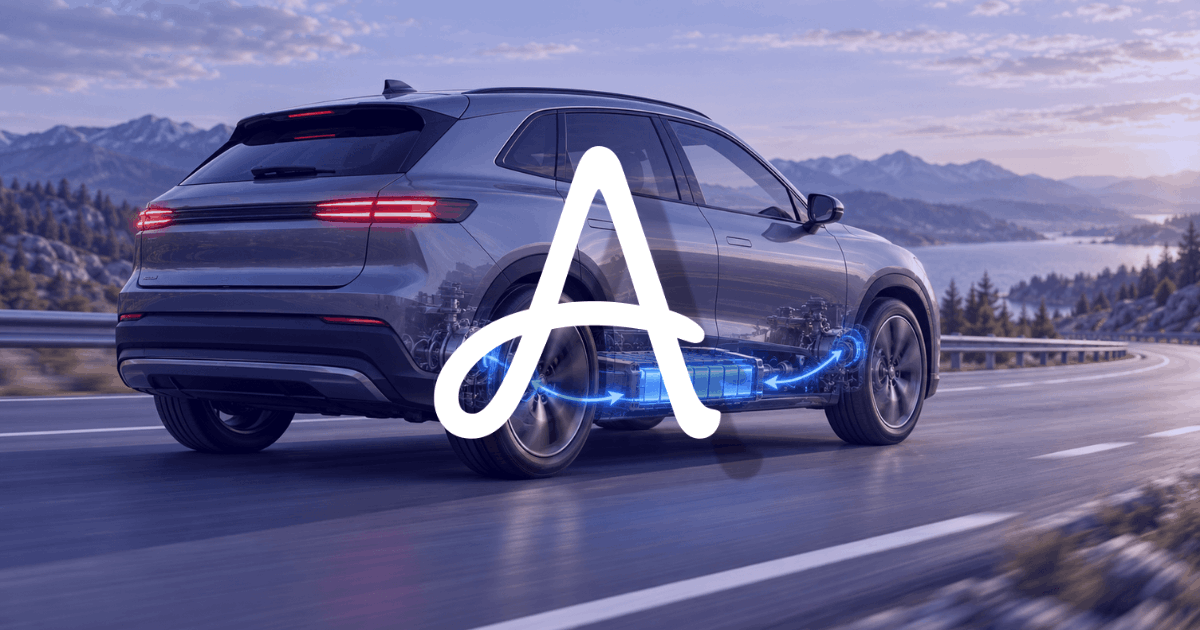
Regenerative braking lets an electric vehicle recover some of the energy it would otherwise lose while slowing down. The drive motor acts as a generator, turns the car’s motion into electricity, and sends that electricity back to the battery. It can improve efficiency, but it cannot recover all the energy used to get the car moving. This is not a new concept for EVs only, even the electric rail engines are using the same technique for years and generating power from their momentum to help the railway grid stay stable.
How regenerative braking works
When an EV accelerates, its battery supplies electricity to a motor that turns the wheels. During regenerative braking, the energy flow reverses:
- The moving wheels turn the drive motor as the car slows.
- The motor generates electricity and creates resistance that helps slow the wheels.
- The car’s power electronics route usable electricity to the battery.
That resistance is why the vehicle slows when you lift off the accelerator in many EVs. Some models also recover energy when you press the brake pedal. The exact response depends on the car’s settings and braking design.
A conventional friction brake slows a car by pressing pads against discs, turning motion mostly into heat. An EV braking system can use regeneration for part of a slowdown and friction brakes when more braking is needed. Friction brakes remain essential for hard stops and situations where regeneration is limited.
What does regenerative braking in EV driving feel like?
In a car with strong EV regenerative braking, lifting your foot from the accelerator can produce noticeable deceleration. A lower setting may feel more like coasting. Some vehicles let the driver adjust the level, while others manage it automatically. Check the owner’s manual for the model you drive.
Is one pedal driving the same thing?
One pedal driving is a driving mode that uses strong deceleration when you release the accelerator. In some vehicles, it can bring the car to a complete stop. It relies heavily on regeneration, but the car may also use its conventional brakes depending on its design and conditions. Keep the brake pedal available, especially for an unexpected stop, a slope or a slippery road.
Regenerative braking benefits and limits
The main regenerative braking benefits are lower energy use during repeated slowdowns and less work for the friction brakes. That can help driving range and reduce brake pad wear. The size of the benefit varies with the route, speed, driving style and vehicle.
Regeneration is especially useful when a journey involves frequent, predictable slowing. On a steady highway run, there are fewer opportunities to recover energy. It is usually more efficient to maintain a smooth speed than to accelerate unnecessarily and try to regain that energy by braking.
A regenerative braking system also has limits. A nearly full or cold battery may accept less charging power, so the car may slow less than expected when you lift off. Strong or emergency braking can exceed what the motor can provide, requiring friction brakes. Energy is lost during conversion and storage, so the battery receives only part of the vehicle’s motion energy.
How to make practical use of it
Look ahead and ease off the accelerator early when it is safe to do so. Leave enough following distance, learn how your car responds at different regeneration settings, and use the brake pedal whenever the situation calls for it. Regenerative braking rewards smooth driving; it is not a reason to brake late.
If you are comparing electric cars for everyday use, our electric car buying guide for India covers broader ownership questions. For the component that stores recovered energy, see our lithium-ion battery explainer.
Frequently asked questions
Does regenerative braking charge an EV while driving?
Yes. When the car slows and the motor generates electricity, some of that energy can return to the battery. It recovers energy from motion; it does not replace plugging in to charge an EV.
Do EVs still have normal brakes?
Yes. EVs retain friction brakes for stopping power when regeneration is insufficient or unavailable. Even with one pedal driving, the driver must be ready to use the brake pedal.
Does stronger regeneration always increase range?
No. Stronger regeneration changes how quickly a car slows, but it does not make energy recovery lossless. A smooth drive that avoids unnecessary acceleration and braking can be more efficient than repeatedly speeding up and slowing down.
