



Understanding Electronic Stability Control (ESC) and When to Use It
Modern vehicles come packed with safety features, and one of the most significant advancements in recent decades is Electronic Stability Control, often abbreviated as ESC. But what exactly is it, and how does it impact your driving? ESC is an automatic system integrated into your car, specifically designed to help you maintain control and keep your vehicle on its intended path while steering . It’s a crucial technology that enhances vehicle control, especially when driving conditions become challenging . Understanding how ESC works, its benefits, and its limitations can make you a safer, more informed driver.
What is the Function of ESC in a Car?
At its core, the function of ESC is to prevent skids and loss of control. Think of it as a vigilant co-pilot constantly monitoring your driving dynamics. The system uses various sensors to track:
- The direction you are steering (steering wheel angle).
- The actual direction the vehicle is moving (yaw rate and lateral acceleration).
- Individual wheel speeds.
If ESC detects a mismatch – meaning the car isn’t going where you’re steering, indicating a potential skid or loss of traction – it automatically intervenes.
How Does ESC Work?
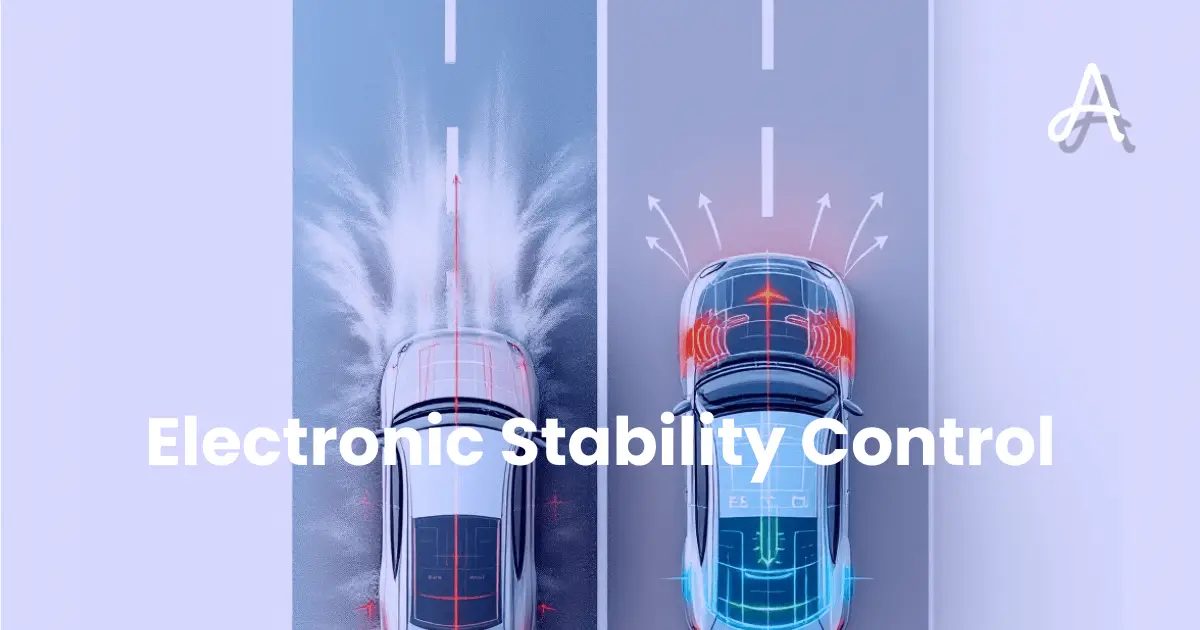
When the system detects a loss of steering control, it doesn’t just sit idly by. ESC automatically applies the brakes, often to individual wheels, to help guide the vehicle back to the driver’s intended path. For instance, if the rear of the car is sliding out (oversteer), ESC might brake the outer front wheel to help tuck the car back into line. If the front is pushing wide (understeer), it might brake the inner rear wheel. In some situations, it can also reduce engine power by limiting the throttle to help regain control. This system monitors the car’s behaviour continuously, not just when the brakes are manually applied .
Benefits of Electronic Stability Control
The primary benefit of ESC is significantly enhanced safety and stability By helping prevent loss of control, ESC can:
- Reduce the likelihood of single-vehicle accidents caused by skidding.
- Improve vehicle control during emergency manoeuvres, like swerving to avoid an obstacle.
- Provide greater confidence when driving in adverse conditions such as rain, snow, or on slippery surfaces.
- Help maintain stability during cornering.
Essentially, it acts as a safety net, correcting potentially dangerous slides before they escalate Can You Disable ESC in a Car? When Might You? Yes, in many vehicles, you can disable the ESC system, usually by pressing a dedicated button often marked “ESC OFF” or with an icon of a car skidding. But why would you want to turn off such an important safety feature?
There are specific, limited situations where temporarily disabling ESC might be helpful:
- Getting Unstuck: If your vehicle is stuck in deep snow, mud, or sand, the ESC system might limit wheelspin, which can hinder your ability to rock the vehicle or use momentum to get free. Turning ESC off allows the wheels to spin more freely, potentially providing the necessary traction to escape.
- Performance Driving (Track Use): Some experienced drivers on closed circuits may prefer to disable or reduce ESC intervention to have more direct control over the car’s driving dynamics and explore the limits of handling (Note: This is for experts in controlled environments ONLY).
Important: For everyday driving on regular roads, ESC should always be left enabled. Disabling it removes a critical layer of safety and significantly increases the risk of losing control, especially during unexpected events or in poor conditions. Remember to turn ESC back on as soon as you are out of the situation that required disabling it.
- Learn more about driving safely in winter conditions
Limitations of ESC
While highly effective, ESC isn’t magic and has limitations:
- Physics Still Apply: ESC cannot overcome the basic laws of physics. If you enter a corner far too fast, ESC may not be able to prevent a skid entirely.
- Traction Dependent: The system relies on the available grip between your tires and the road. If tires are worn or unsuitable for the conditions, ESC’s effectiveness is reduced.
- Reactive, Not Proactive: ESC reacts to instability once it begins; it doesn’t prevent the initial cause (like excessive speed or abrupt steering).
- Focus on Stability: ESC primarily manages lateral (sideways) stability. While it uses the brakes, its main goal isn’t stopping distance – that’s the job of the Anti-lock Braking System (ABS).
Conclusion
Electronic Stability Control is a vital safety technology that significantly enhances vehicle control and helps prevent accidents by mitigating skids and loss of traction. It works automatically by monitoring your steering input and the vehicle’s actual movement, applying brakes selectively to keep you on course While there are rare instances where temporarily disabling it might be necessary (like getting unstuck), for the vast majority of driving situations, keeping ESC active is crucial for maximizing your safety on the road.
