



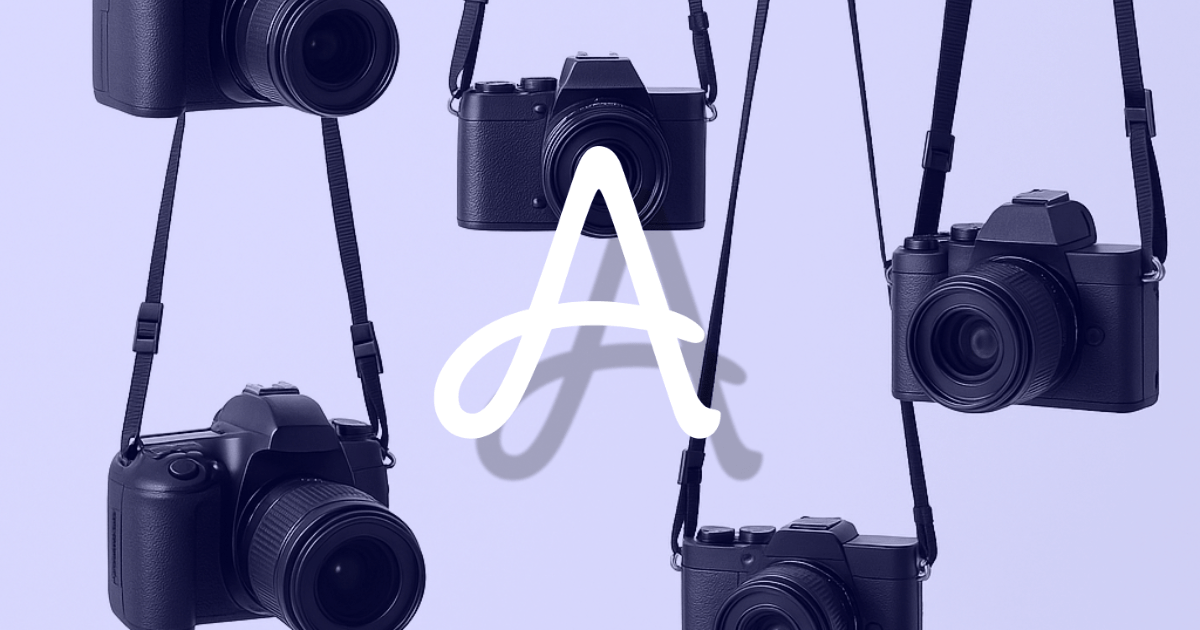
Mirrorless vs. DSLR Cameras: Which is Right for You in 2025?
For decades, the DSLR was the undisputed king of high-quality photography. Today, the choice is more complex with the rise of a powerful challenger. When deciding between a mirrorless camera and a DSLR camera, photographers must weigh significant differences in design, performance, and handling. Understanding these core distinctions is the first step toward choosing the system that best aligns with your creative goals.
The fundamental difference between these two camera types lies in how they direct light to the photographer’s eye.
- A DSLR (Digital Single-Lens Reflex) camera uses an internal mirror and a pentaprism. The mirror reflects the light coming through the lens up into an optical viewfinder (OVF), giving you a direct, real-time view of the scene. When you press the shutter button, the mirror flips up, allowing the light to hit the image sensor instead.
- A mirrorless camera, as the name implies, has no mirror. The light passes directly through the lens onto the image sensor at all times. The image is then displayed on the rear LCD screen or through an electronic viewfinder (EVF).
Key Comparison Points for Photographers
While the internal mechanics are the main distinction, the consequences of this design choice impact nearly every aspect of the user experience.
Size and Portability
By removing the bulky mirror box and pentaprism, manufacturers can make a mirrorless camera significantly smaller and lighter than a comparable DSLR. This makes them an excellent choice for travel, street, and everyday photography where portability is a priority.
Viewfinders: Optical vs. Electronic
This is a major point of debate among photographers.
- DSLR Optical Viewfinder (OVF): Provides a clear, lag-free, unfiltered view directly through the lens. What you see is exactly what is there. However, it cannot simulate exposure changes or display digital information like a live histogram.
- Mirrorless Electronic Viewfinder (EVF): This is a tiny, high-resolution screen. Its major advantage is showing you exactly what the sensor sees, including the effects of your settings (like exposure, white balance, and depth of field) in real-time. The downside can be a slight lag in some models and higher battery consumption.
Autofocus and Speed
Historically, DSLRs were known for superior autofocus speed, using a dedicated phase-detection sensor that excelled at tracking fast-moving subjects through the OVF.
Mirrorless cameras, however, have advanced rapidly. They use on-sensor autofocus systems, often combining phase-detection and contrast-detection pixels across a much wider area of the frame. Because there is no mirror to move out of the way, mirrorless cameras can often achieve much faster continuous shooting speeds (burst rates) than their DSLR counterparts, making them ideal for action and wildlife photography.
Image Quality and Video
When comparing cameras with similarly sized sensors and processors, the image quality is virtually identical. The quality is determined by the sensor and image processing engine, not by the presence or absence of a mirror.
However, mirrorless cameras generally have a significant advantage in video. Their on-sensor autofocus is more effective for video tracking, and features like focus peaking and zebra stripes are native to their electronic view.
Frequently Asked Questions (FAQs)
Q1: Is the image quality of a mirrorless camera better than a DSLR?
No, not inherently. For any given sensor size (e.g., APS-C or full-frame) and generation, the potential image quality is the same between a mirrorless camera and a DSLR camera. The final image is captured by the sensor, and both camera types use the same sensor technology.
Q2: Are DSLR cameras becoming obsolete?
While the industry’s research and development are now heavily focused on mirrorless systems, DSLRs are far from obsolete. They remain powerful, reliable tools with a vast and mature ecosystem of lenses and accessories. For many photographers, a DSLR camera still offers superior battery life and the unique experience of an optical viewfinder.
Conclusion: Which Should You Choose?
The choice between a mirrorless camera and a DSLR camera is a personal one. If you value a compact and lightweight system, cutting-edge video features, and high-speed shooting, a mirrorless camera is likely the best fit. If you prefer the unfiltered view of an optical viewfinder, longer battery life, and access to a massive catalogue of legacy lenses, a DSLR remains a formidable and relevant choice.
