



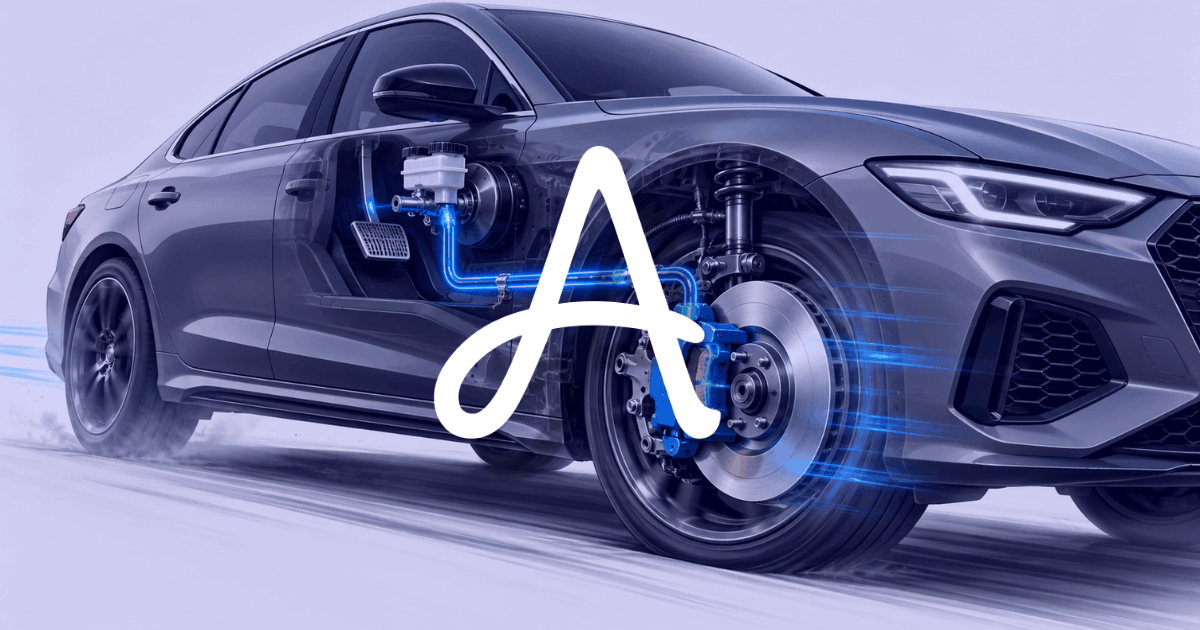
A car braking system slows the wheels by turning the car’s motion into heat at the brakes. In a conventional hydraulic setup, pressing the pedal sends pressure through brake fluid to the wheel brakes. Disc brakes use pads against a rotating disc; drum brakes press shoes against the inside of a drum. ABS and EBD help manage that braking force electronically, but neither creates extra tyre grip.
How car brakes work, step by step
- Pedal input: The driver presses the brake pedal. A brake booster or another assist system may reduce the effort needed.
- Pressure: In a conventional hydraulic system, the master cylinder pressurises brake fluid in the brake lines.
- Wheel brakes: Hydraulic pressure moves caliper pistons at disc brakes or wheel-cylinder pistons at drum brakes.
- Friction: Pads grip a disc, or shoes press against a drum. This slows wheel rotation and produces heat.
- Tyre grip: The tyres transfer the slowing force to the road. Available grip, speed and road conditions still determine how effectively the car stops.
Some hybrids and electric cars also use regenerative braking, and some modern systems generate or control braking pressure differently. The disc or drum brakes remain part of the stopping system, while the exact pedal-to-brake arrangement varies by vehicle.
Key brake system components
| Component | What it does |
|---|---|
| Brake pedal and assist system | Take the driver’s request and help apply braking force. |
| Master cylinder, fluid and lines | Create and carry hydraulic pressure in a conventional system. |
| Brake discs and pads | Provide the friction surfaces in a disc brake. |
| Brake drums and shoes | Provide the friction surfaces in a drum brake. |
| ABS sensors and control unit | Monitor wheel speed and adjust pressure when a wheel risks locking. |
Disc vs drum brakes: what changes?
With a disc brake, a caliper squeezes brake pads against both sides of a disc, also called a rotor. With a drum brake, a wheel cylinder pushes curved brake shoes outward against the drum’s inner surface.
| Feature | Disc brake | Drum brake |
|---|---|---|
| Friction parts | Pads and disc | Shoes and drum |
| Layout | Disc and caliper are relatively exposed | Shoes sit inside an enclosed drum |
| Heat under repeated braking | Generally easier to cool | Enclosed design can retain more heat |
| Common use | Front wheels and many rear-wheel setups | Rear wheels on some cars; also used in some parking-brake designs |
That does not make every disc setup better than every drum setup. Brake size, materials, cooling, tyres and the vehicle’s design all matter. A front-disc and rear-drum arrangement can be appropriate when engineered for that car.
ABS in cars: preventing wheel lock
The anti-lock braking system watches wheel speed. If a wheel is about to lock during hard braking, the system reduces pressure at that wheel and then increases it again as grip returns. This helps the driver retain steering control. It does not guarantee a shorter stopping distance on every surface.
During an emergency stop in a car with four-wheel ABS, press the brake pedal firmly and keep pressing. Pedal pulsing can be normal. For the full explanation and driving guidance, read our guide to how ABS prevents wheel lock.
EBD in cars: distributing braking force
Electronic brake-force distribution (EBD) adjusts how braking force is shared between wheels or axles, depending on the system and driving conditions. For example, weight shifts toward the front under braking, changing how much braking force the rear tyres can use. EBD helps the brake system account for such changes.
ABS and EBD have different jobs: ABS responds when a wheel is approaching lockup, while EBD manages the distribution of braking force. Their exact operation and warning indicators vary by model, so the owner’s manual is the guide for a specific car.
When should the brakes be inspected?
Have the brakes checked if the pedal feels unusually soft, braking performance changes, the car pulls during braking, or a brake warning stays on. Grinding noises or a persistent pad-wear warning also need attention. A brief squeal alone does not identify a fault, so a technician should assess the cause.
Follow the vehicle manufacturer’s inspection schedule and brake-fluid specification. If the pedal has little resistance or braking is clearly impaired, stop in a safe place and arrange assistance rather than continuing to drive.
Frequently asked questions
Are brake pads and brake shoes the same?
No. Brake pads press against a disc in a disc-brake assembly. Brake shoes press against the inner surface of a drum in a drum-brake assembly. Both are friction parts that wear and need inspection.
Can a car have ABS with rear drum brakes?
Yes. ABS controls wheel-brake pressure and can work with either disc or drum wheel brakes. The presence of rear drums does not by itself tell you whether the car has ABS.
Does EBD replace ABS?
No. EBD manages the distribution of braking force, while ABS helps prevent wheel lock during hard braking. They are complementary functions in many vehicles.
