



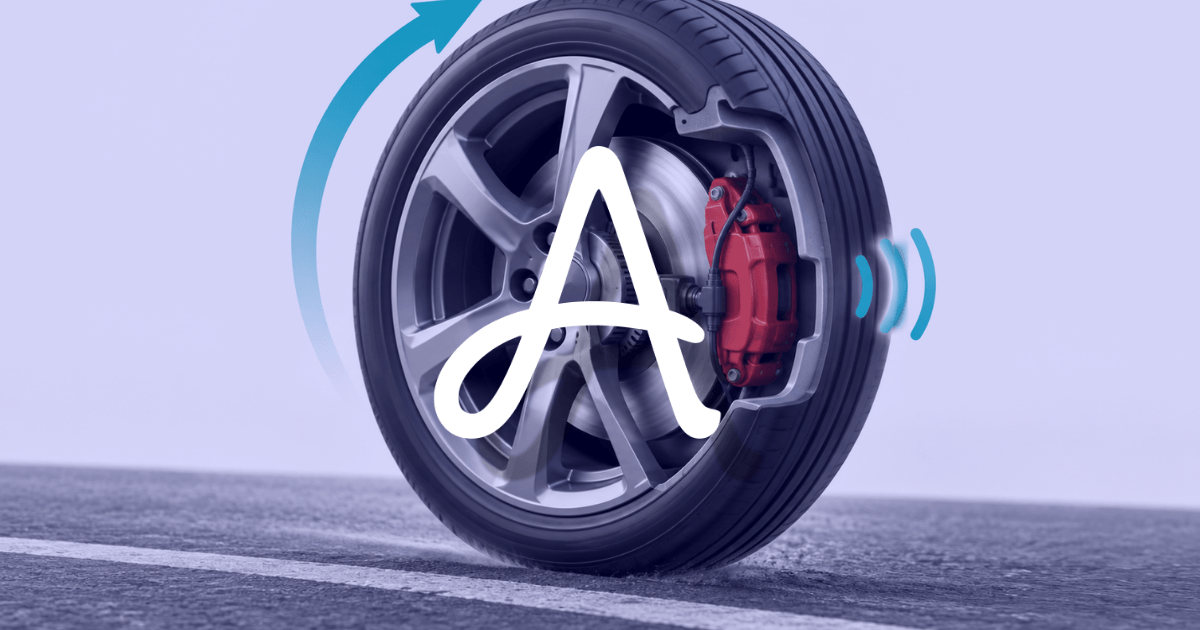
The anti-lock braking system (ABS) helps prevent a car’s wheels from locking during hard braking. It adjusts brake pressure so the wheels can keep rotating, helping you steer while slowing down. That is how ABS reduces the risk of a locked-wheel skid, but it does not make a car skid-proof.
Why can hard braking make a car or motorcycle skid?
A locked wheel has stopped rotating even though the car is still moving. Its tyre slides across the road, and steering becomes much less effective. Turning the steering wheel cannot reliably guide the car if the front tyres are locked and sliding.
ABS addresses this particular problem in car braking: too much braking force for the grip available at a wheel.
How does the anti-lock braking system work?
In a typical modern car, wheel-speed sensors feed information to an electronic controller. A hydraulic unit uses valves and a pump to manage brake pressure.
- Detect: The controller identifies a wheel approaching lockup.
- Reduce: It lowers brake pressure at that wheel so it can recover rotation.
- Reapply: It increases pressure again as the wheel recovers.
This cycle repeats rapidly while lockup remains a risk. You keep pressing the pedal; the system makes the pressure adjustments.
What should you do when ABS activates?
For a car with four-wheel ABS, apply firm, continuous pressure during an emergency stop. Do not pump the pedal. Steer towards a clear, safe path if necessary, avoiding abrupt steering movements. Follow the instructions in your car’s owner’s manual.
You may feel the pedal pulse or vibrate and hear mechanical noise during ABS operation. The pedal can also move farther than expected. These sensations can be normal when ABS is working, so they are not a reason to release the brake during an emergency stop.
For example, if traffic suddenly stops on a wet road, the driver’s job is to brake firmly and maintain a safe direction. ABS manages the tendency of the wheels to lock. It cannot guarantee there is enough space to avoid a collision.
Does ABS always shorten stopping distance?
No. Stopping distance depends on the surface, tyres, speed and conditions. ABS can improve braking performance, but a shorter stop is not guaranteed.
On loose gravel or some snow-covered surfaces, a car with ABS may take longer to stop than one with locked wheels. Loose material can build up ahead of a sliding tyre, increasing resistance. That does not make locking the wheels a sensible driving technique: steering control is compromised.
Leave adequate following distance and slow down for poor conditions. ABS is not a reason to follow another vehicle more closely.
ABS and ESC: different roles in vehicle control
ABS limits wheel lock during braking. Electronic stability control (ESC) has a broader job: it compares the driver’s intended direction with the car’s movement and can brake selected wheels or reduce engine power to help correct a developing slide.
The systems work together, but ABS alone cannot prevent a skid caused by entering a corner too fast. Our guide to how electronic stability control works explains that additional layer of vehicle control.
Frequently asked questions
Does an ABS warning light mean the brakes have failed?
Not necessarily. Conventional braking may remain available while the anti-lock function is unavailable. A light that stays on or appears while driving needs prompt inspection. Follow your owner’s manual, and do not assume the car is safe to drive if braking feels abnormal or other brake warnings appear.
Can the wrong tyres affect ABS?
Yes. Incorrect tyre sizes or types can interfere with ABS operation. Use the tyre specifications approved for your vehicle and follow the manufacturer’s replacement guidance.
Is ABS the same as automatic emergency braking?
No. ABS manages wheel lock during braking. Automatic emergency braking (AEB) is a separate driver-assistance function that can apply the brakes when it detects a potential collision. Having ABS alone does not mean the car will detect an obstacle and brake for you.
