



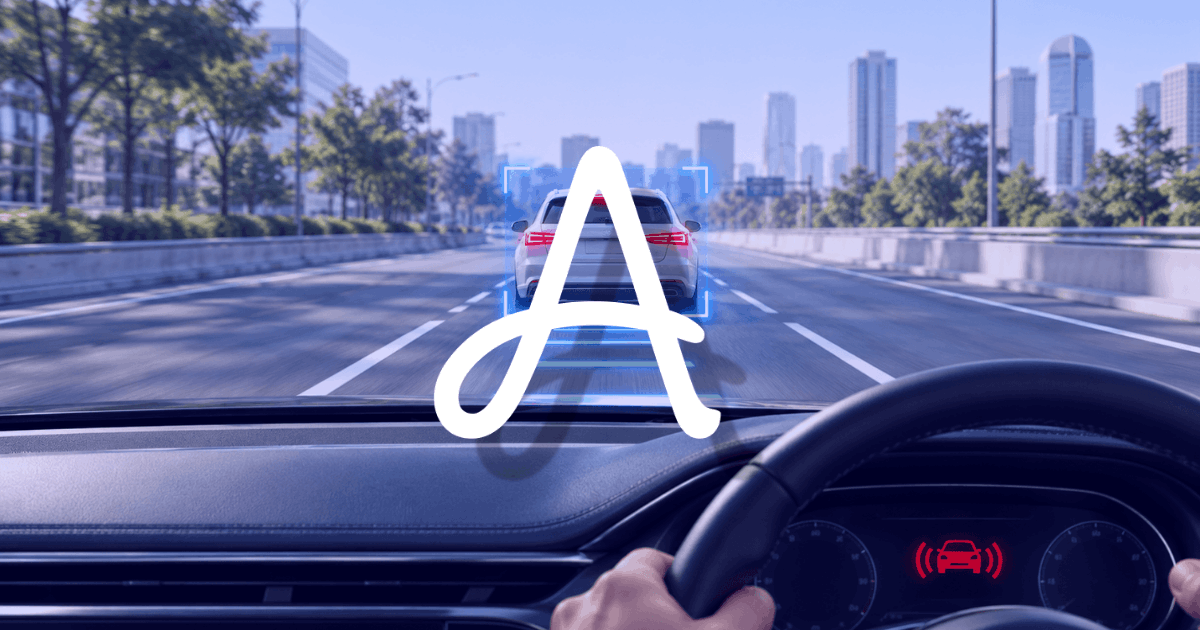
ADAS in cars means advanced driver assistance systems: features that warn a driver about hazards or help with braking, speed and steering. They can reduce some driving workload and help avoid certain crashes, but they do not replace an attentive driver. The key is to know whether a feature only alerts you or actually acts on the car.
How ADAS in cars works
ADAS uses information from sensors to understand part of the car’s surroundings. A forward camera can read lane markings and some signs. Radar can measure the distance and relative speed of objects ahead or beside the car. Rear cameras and short-range sensors can help while parking. The exact sensor mix varies by car and feature; a car does not need every type of sensor to offer ADAS.
Software interprets those inputs, checks whether a condition has been met, and then warns the driver or requests braking or steering through the car’s control systems. That sequence happens within the feature’s operating limits. A warning light does not mean the system can handle every road situation.
For a closer look at one possible sensing technology, see our guide to how LiDAR works in vehicles.
ADAS features: what each one does
| Feature | What it does | Typical response |
|---|---|---|
| Forward collision warning (FCW) | Detects a possible collision with a vehicle ahead. | Warns the driver; it does not brake by itself. |
| Automatic emergency braking (AEB) | Responds when a forward collision is judged imminent. | Applies the brakes to try to avoid the crash or reduce its severity. Pedestrian AEB is a separate capability to check for. |
| Adaptive cruise control (ACC) | Maintains a selected speed and adjusts it to keep a set gap from a vehicle ahead. | Accelerates or brakes within its operating range. The driver still steers and supervises. |
| Lane departure warning (LDW) | Detects an unintended drift toward or across a marked lane edge. | Gives a visual, audible or steering-wheel alert; it does not steer the car back. |
| Lane keeping assist (LKA) | Responds when the car is about to leave its lane unintentionally. | Briefly helps correct the path through steering or selective braking, depending on the system. |
| Lane centering assist | Tracks the car’s position between detected lane markings. | Provides ongoing steering assistance to stay near the lane centre while engaged. |
| Blind spot warning | Detects a vehicle in an adjacent blind spot. | Warns the driver, often in the door mirror. Blind spot intervention, if fitted, can also help resist an unsafe lane change. |
| Rear cross traffic warning | Detects traffic approaching from the side while reversing. | Warns the driver. Rear automatic braking, if fitted, is a different feature that can apply the brakes. |
| Traffic sign recognition or speed assistance | Identifies some road signs or speed limits using a camera and, in some systems, map data. | Displays information or warns about speed. Accuracy depends on the road and system. |
| Automatic high beams | Detects lighting and traffic conditions. | Switches between high and low beams when its conditions are met. |
Names and capabilities differ across manufacturers. For example, a brochure’s “lane assist” may mean a warning, a brief correction or continuous centering. Check the owner’s manual and the exact variant before assuming which response the car provides.
Level 1 ADAS versus Level 2 ADAS
Level 1 means a feature continuously assists with either steering or speed and braking. Adaptive cruise control on its own is a common example. Level 2 means the engaged system continuously assists with both steering and speed and braking, such as lane centering combined with adaptive cruise control.
These levels describe an engaged driving function, not every safety feature fitted to the car. AEB and collision warnings are momentary interventions or alerts, so their presence alone does not make a car Level 1 or Level 2. At both Level 1 and Level 2, the driver monitors the road and must be ready to steer or brake. Level 2 is not self-driving.
Where ADAS safety features can struggle
Sensor-based assistance has limits. Faded or missing lane markings can affect lane features. Heavy rain, fog, glare, mud or an obstructed camera or radar cover can reduce detection. Traffic sign systems can misread a sign or use outdated map information. AEB may not detect every object or stop in time in every situation.
Keep cameras and sensor covers clear as the owner’s manual instructs. Pay attention to dashboard alerts, maintain a safe following distance, and take over whenever the system is uncertain. After a windscreen replacement or collision repair, follow the manufacturer’s guidance on inspection or calibration.
What to check before buying an ADAS-equipped car
- Check the exact variant’s feature list, since equipment can differ within the same model.
- Ask whether each feature only warns or can brake or steer, and under what conditions it works.
- Look for pedestrian AEB and rear automatic braking explicitly if those matter to you.
- During a permitted test drive, learn how warnings appear and how to switch settings without distraction.
- Read the owner’s manual for operating speeds, sensor locations and limitations.
For local context, our existing discussion of ADAS in India considers how these features fit Indian driving conditions. Treat any model or variant examples there as time-sensitive and verify current specifications with the manufacturer.
FAQs
Does Level 2 ADAS drive the car for you?
No. An engaged Level 2 system can assist with steering and speed at the same time, but the driver must keep monitoring the road and be ready to take control. It is driver assistance, not autonomous driving.
Is lane keeping assist the same as lane centering?
No. Lane keeping assist generally intervenes when the car starts to drift out of a lane. Lane centering applies steering assistance continuously to help keep the car near the middle of a detected lane while the feature is engaged.
Does every car with ADAS have automatic emergency braking?
No. ADAS is an umbrella term. A car may offer warnings or parking aids without forward AEB, and pedestrian detection may be a separate capability. Check the exact variant’s specifications and manual.
